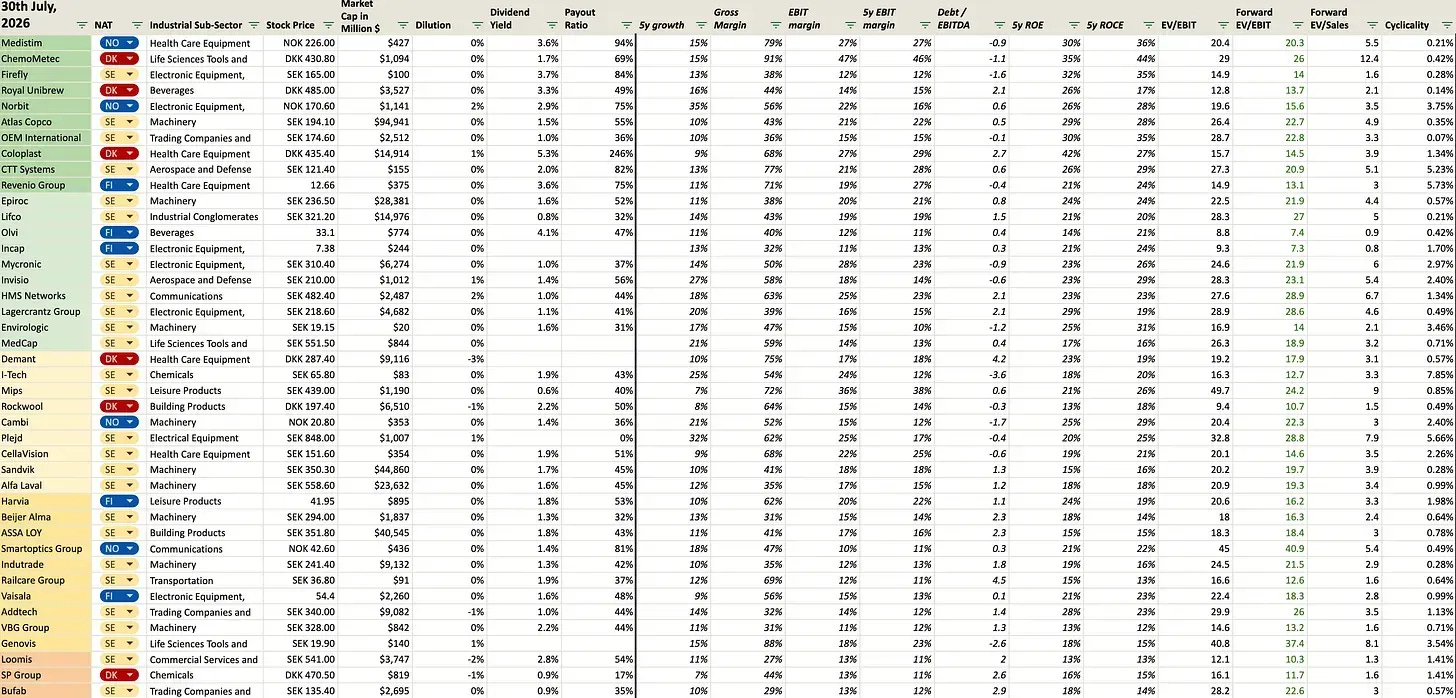
In May 2024, we arrived at a list of 22 Industrial companies. That group delivered a 19% CAGR over the next 2 years. However, as is with most no-touch portfolios, returns have been concentrated in the winners: Kitron, Kongsberg Gruppen & Norbit.

Then came June 2025, we made a broader list of 40 companies, and seperated them into sectors. We then ranked the top 20 companies scoring best on quantifiable metrics like growth, margins, stability, return on capital and price. But, in contrast to the 2024 list, returns have been negative 1% one year later for the group as whole.

Negative contributors like Revenio and Invisio have weighted on the positive returns from Mycronic, Atlas Copco and OEM International in particular.
An interesting observation, is that the average EV / EBIT for the group as a whole is today at 22x trailing EV/EBIT, where it was closer to 26x last year. Thus, resulting in a cheaper multiple for the same fundamentals (margins and growth still as high).
We though an interesting idea, would be to add these writeups into a hypothetical portfolio strategy, where $100 was added to each idea every year a company reached the top 20 list. We are not certain such a portfolio will outperform, but we think it’s interesting to track the companies the screener chooses over time.
We screen using simple criteria like growth, margins, return on capital and price.
You can see the hypothethical portfolio visualized below, with returns in colour.
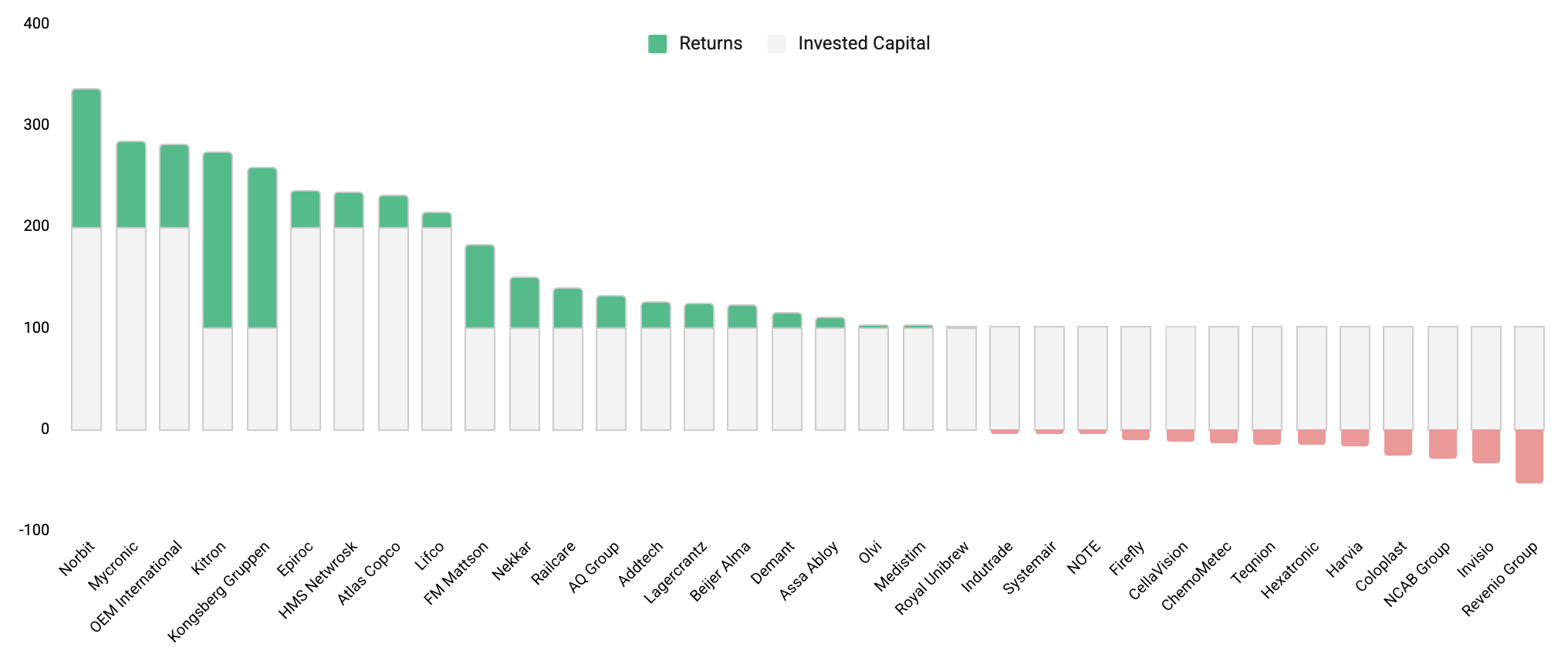
For this year, we wanted to use the same criteria like last year. We got 3 more companies this year, from the 40 last year, but several names have been replaced. Mostly due to growth or margins falling below the screen threshold. Since we’re using 5-year averages, a company with poor results during covid would for instance have a favourable comparison point, and vise versa.
We really enjoyed putting this together, and hope you’ll enjoy it as much as we did. Perhaps you can recognize a few companies on this years’ list below?
Disclaimer: This newsletter is provided for informational and educational purposes only. The views expressed are my own and do not constitute financial advice or recommendations to buy or sell any securities. The author may own shares in the equities discussed.
Top Nordic Industrials of 2026
2026 have been an eventful year for many industrial companies, especially those catering to the demands from the Datacenter buildout and Defence in particular.
On the other hand, those investing in healthcare industrials, like Revenio, Cellavision and Demant, have done poorly. Importantly, past returns are no guarantee for future returns. Today’s winners may be this year’s losers in the stock market.
Our goal in the stock market is to participate in the value creation from the most exceptional people and businesses over time. The average company in this year’s top 20 list, have quantifiable metrics few companies can match.
2026 Average Scores:
The companies on this year’s list sell physical products with a 59% gross margin on average, with a 5-year average EBIT margin of 23% (!). And this, with a compounded annual growth of 15%, despite paying out 61% of profits to dividends. That results in a 5-year ROCE of 29%, without using much leverage.
And on top of that, investors receive a 2,7% dividend yield as of today, at a forward EV / EBIT multiple of 18,5x. And after deducting tax, roughly 23x Price to Earnings.
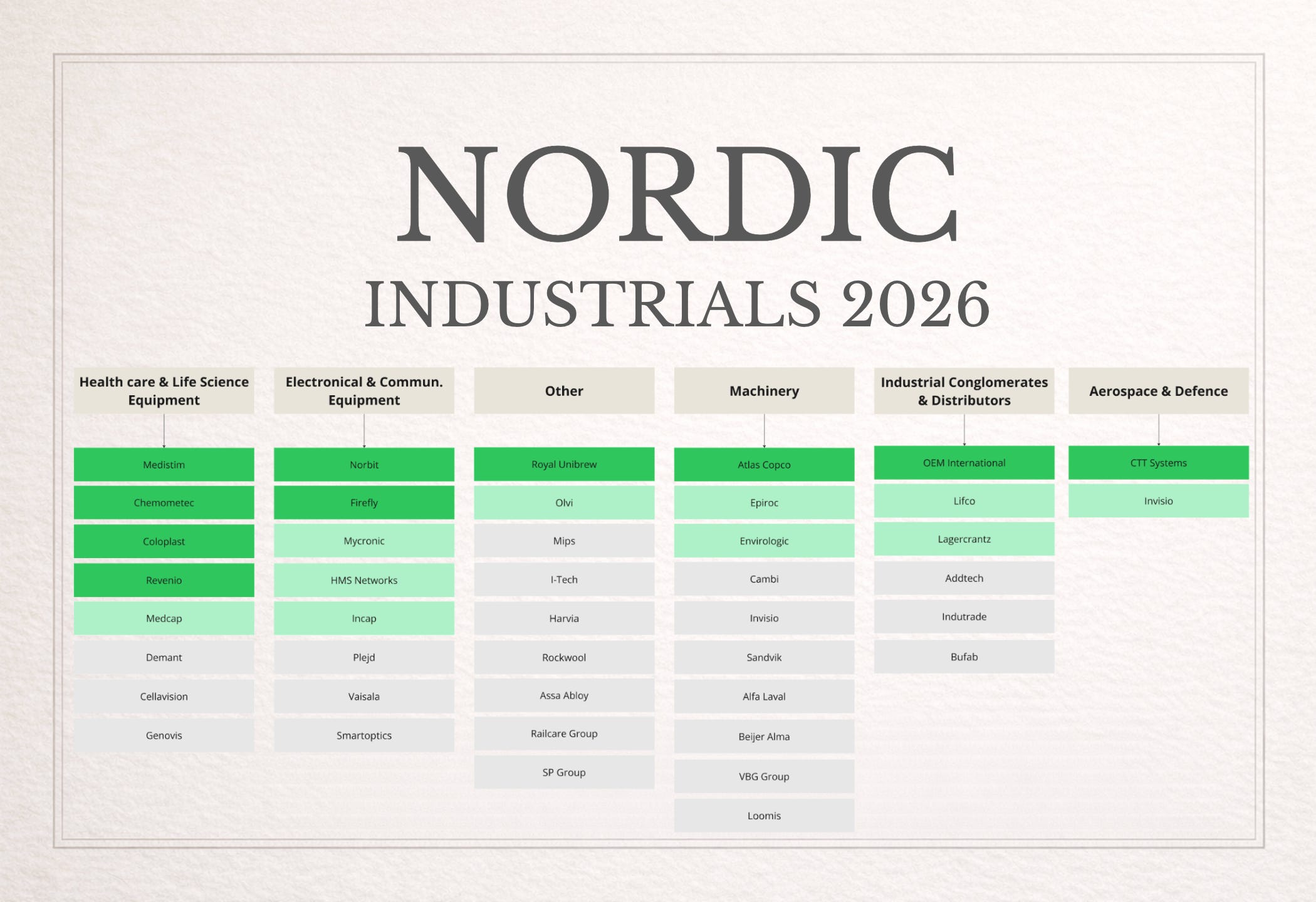
The full list can be seen below, with top 10 and 20 coloured in dark and light green.
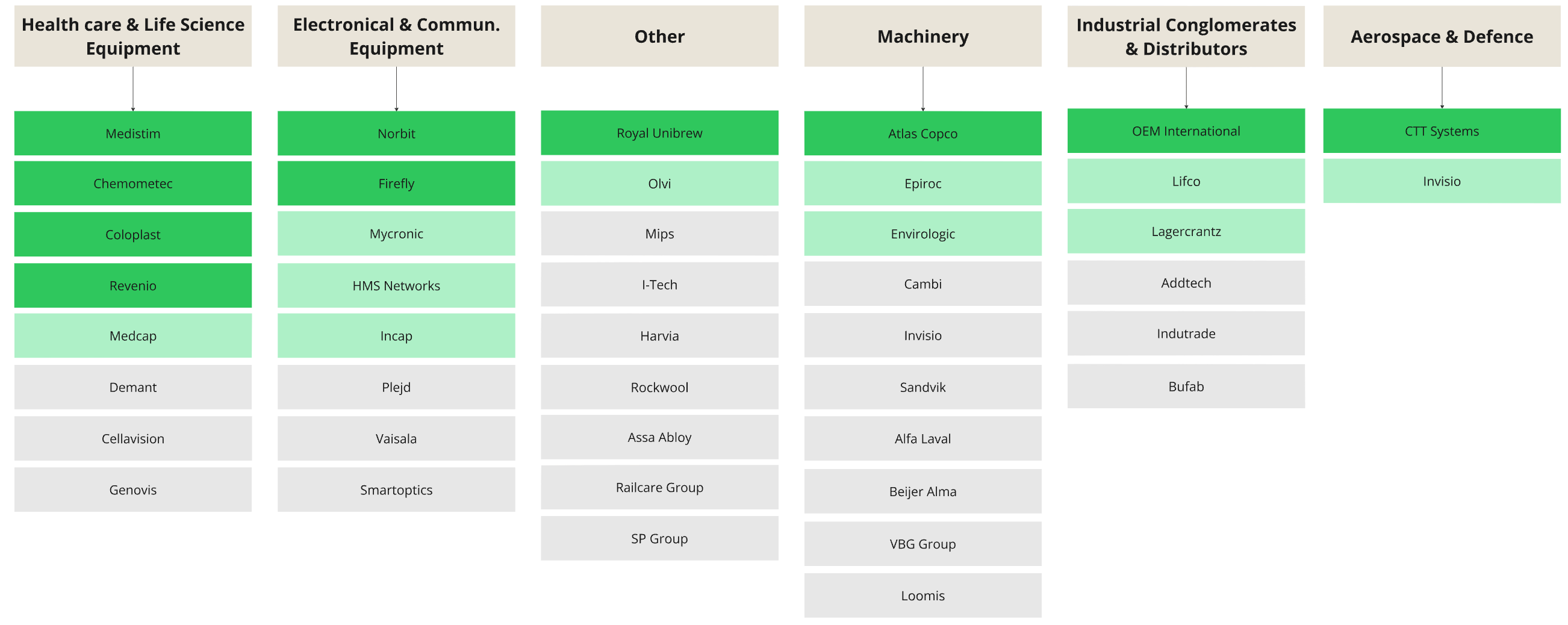
We’ll leave the full detailed list at the end of the writeup.
New Companies top 20 — Niche Leaders
Among companies we haven’t seen in the top 20 before, we find several companies, with a common characteristic — mostly niche leaders within their markets:
Royal Unibrew
CTT Systems
Incap
Lagercrantz
Envirologic
Medcap
Of these, we are most familiar with Lagercrantz (#19), perhaps the most impressive Nordic Serial Acquirer currently. In Q1 2026, Lagercrantz delivered an outstanding quarter, with 6% organic growth and 12% more from acquisitions. All their sectors are performing strongly, especially Electrify.
Royal Unibrew (#4), a Danish beverage company also appeared on this years list. 56% of Royal Unibrew’s sales are to non-alcoholic brands. Impressively, Royal Unibrew has managed to deliver positive organic growth in a tough beverage market for the last 5 years. Moreover, they’ve completed many acquisitions of brands, and with ROIC around 13%, they’re able to create value doing so.
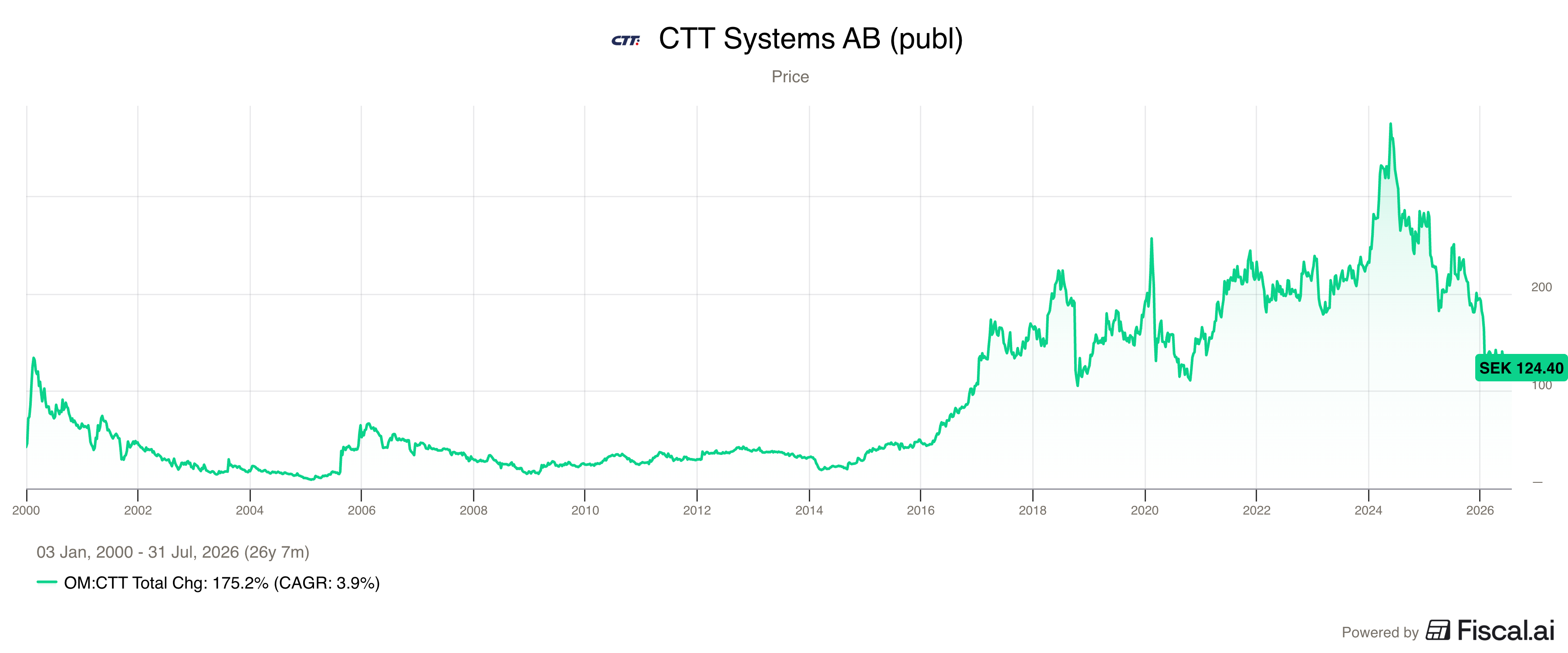
CTT Systems (#9) is a much smaller company, operating as a niche supplier within humidity control for aircrafts. While they do sell aftermarket parts, CTT have been quite cyclical over the years. This is also what enabled them to pop up in this years screen, given the favourable comparison period in 2021 (travel restrictions covid). But CTT is in a new cycle now, driven by production delays from Airbus and Boeing.
Investors interested in CTT Systems should probably understand the cycle before extrapolating past profits into the future. Positively, ROIC over the cycle looks good.
Incap (#15) is a niche electronical equipment manufacturer from Finland. We first heard about the company in 2023, but their customer concentration was a clear weakpoint at the time — a risk that materialized quickly after when losing a key customer.
But since then, Incap have impressed, also with contribution from acquisitions. By focusing on low-cost manufacturing regions, like India and Slovakia, combined with the attractive unit economics within high-mix low-volume products, Incap continues to generate attractive returns on capital. They also reinvests all profits. With expectations for FY2026 around €28 million EBITA, Incap trades at 8x EV / EBITA.
On the other hand, investors interested in Incap today should be well aware of their turbulent past — being close to bankruptcy several times. The combination of cyclical end-markets, tough competition (in the past at least), concentrated customer base and illiquid stock, have made Incap a bumpy ride for long-term shareholders.
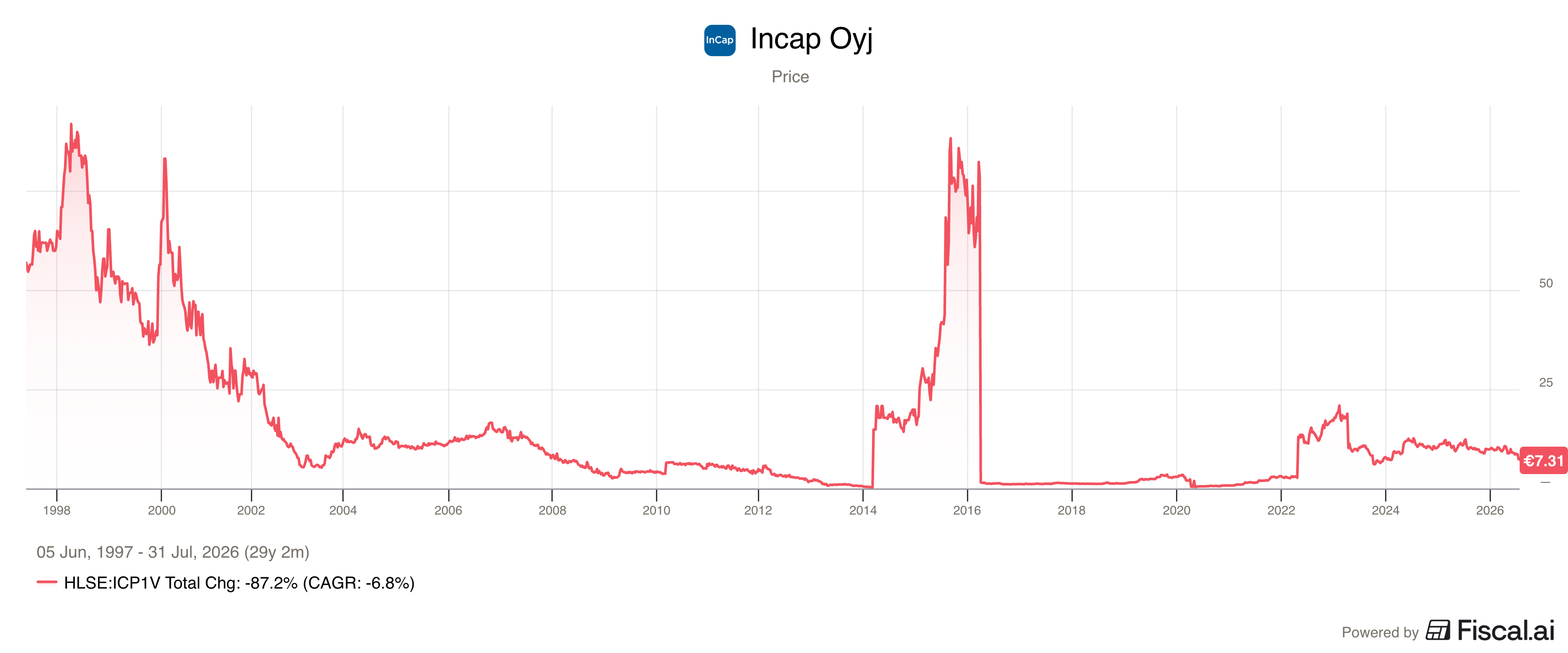
While it feels advantegous looking for small and micro-caps sometimes, many smaller companies remain small for a reason. Time will tell whether Incap can move from a €200 million market cap to something larger. If they’re on track for that now, it may take investors a long time to recognize, given the scars left from Incap’s turbulent history in the past.
Envirologic (#19) was a new name for us. They specialize on automating the cleaning of lifestock facilities, especially for pigs. They primarily sell equipment through distributors and the end-customers achieve labour savings and increased animal wellfare. The largest opportunity, may be to expand into chicken and egg production, much larger markets than the pig market, where Envirologic is already a market leader.
However, Envirologic has just had their best 5-year period in a long time, with a cyclical history behind them. That means investors looking at their favourable performance in recent times, should probably understand a potential cycle before extrapolating current earnings going forward. Those also seem to head down for now.
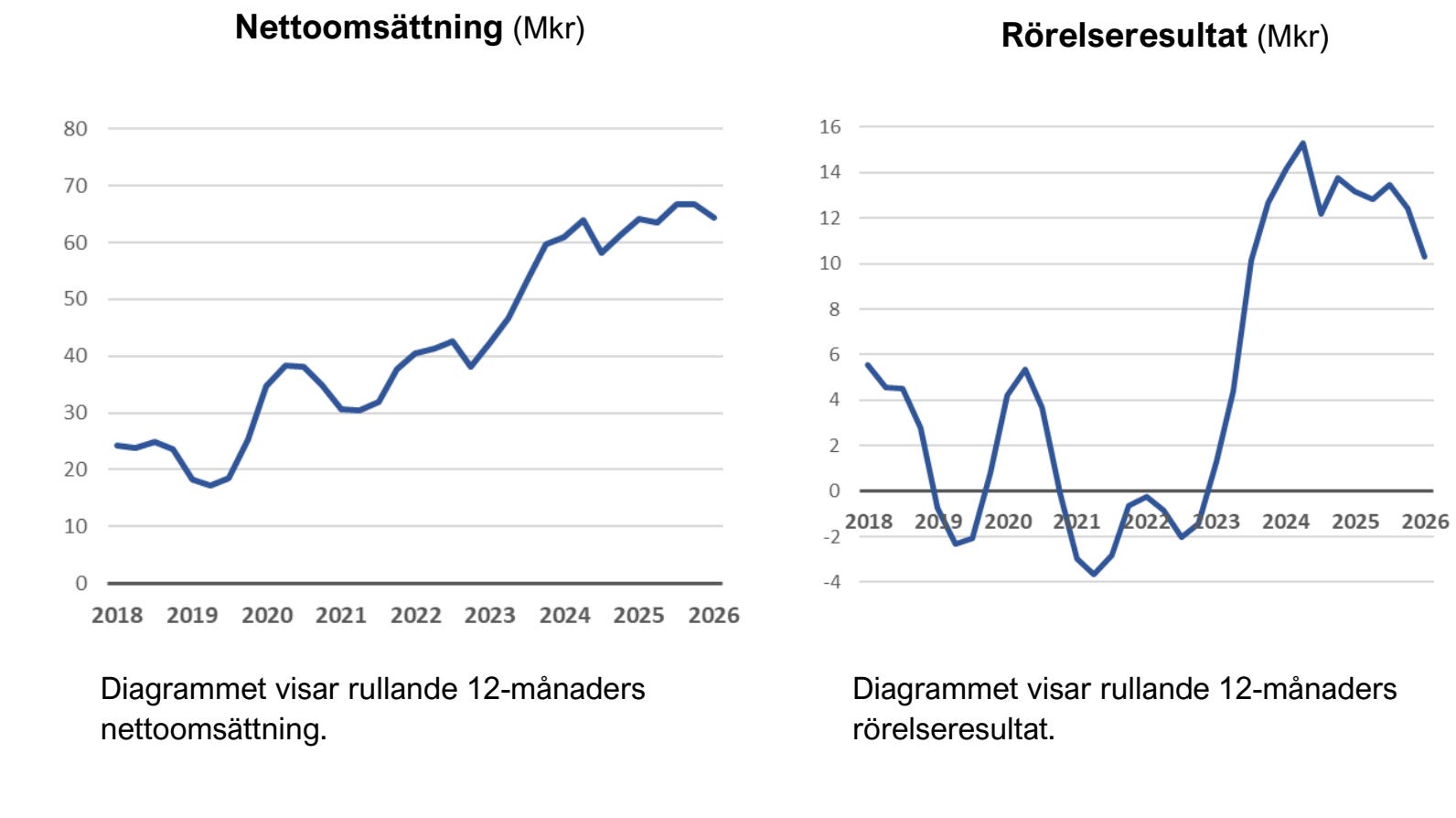
We believe these companies, which we haven’t researched that thoroughly, explains the danger of investing strictly based on screens. There’s often much more than what meets the eye in a couple key financial metrics. If we acted as model-based investors in real life, a 10-year financial period would probably have made more sense, as illustrated with Envirologic’s positive 5-year period currently.
However, it’s always interesting to look closer at such names. There’s almost always something to learn from different companies, even if they never touch your own portfolio.
Medcap (#20) is a niche life science equipment business, with everything from surgical equipment to medical consumables. Their key advantage, however, is their acquisition-engine and decentralized culture, which have enabled them to compound profits at attractive rates, despite the niche markets their businesses typically have.
With thousands of small healthcare companies run by founders approaching retirement, Medcap can be a preferred owner for many looking to exit. And with ROCE around 16%, Medcap is one of the higher-quality serial acquirer with a defensive traits.
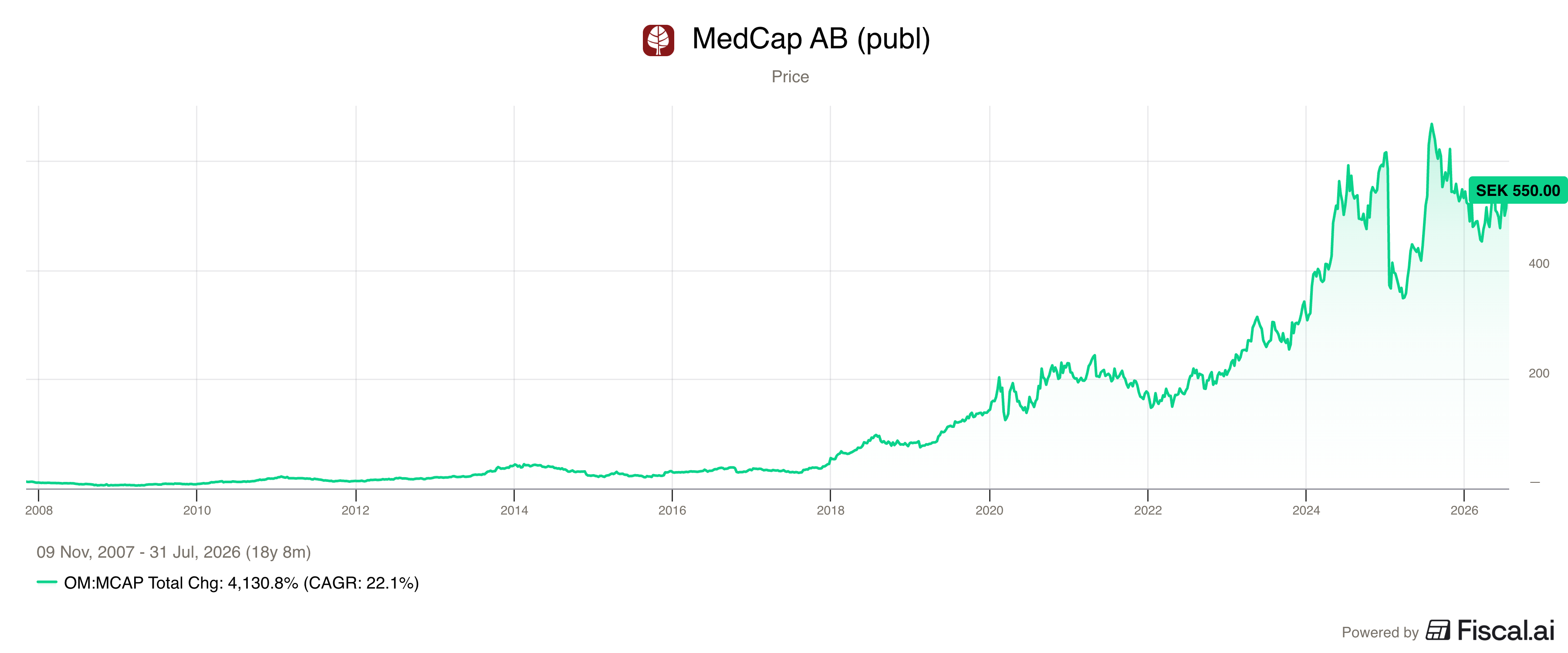
Looking at Medcap’s stock performance, it’s clear their history have been much more stable, and they resemble more a classical compounder. Total returns for shareholders have been very attractive, and they’ve delivered these from a combination of organic + acquired growth.
Looking at the price for Medcap’s stock, it always trades at a market premium, but currently trades at a 23x FCF multiple, which is lower than it’s own average (31x). You can see the shareprice return for Medcap stock below, not including dividends.
Now for the final two sections — the complete list with detailed company profiles and our five top picks from this group.
Outsiders’ Corner: Top 5 Picks
Regular readers will not be surprised that Medistim and Norbit remain two companies where we have a strong positive bias. Both businesses have demonstrated exceptional returns on invested capital, attractive margins, and a proven ability to expand into new growth opportunities while maintaining strong competitive positions. We own both, and have covered them closely in previous writeups.
However, 3 ideas popped up in the top 20 section this time. We’ll go over those in detail here, with our expected return from each one.
Invisio
At a $1 billion market cap, Invisio is still relatively small, but still a high-quality company positioned in the modernization of defence equipment in particular.
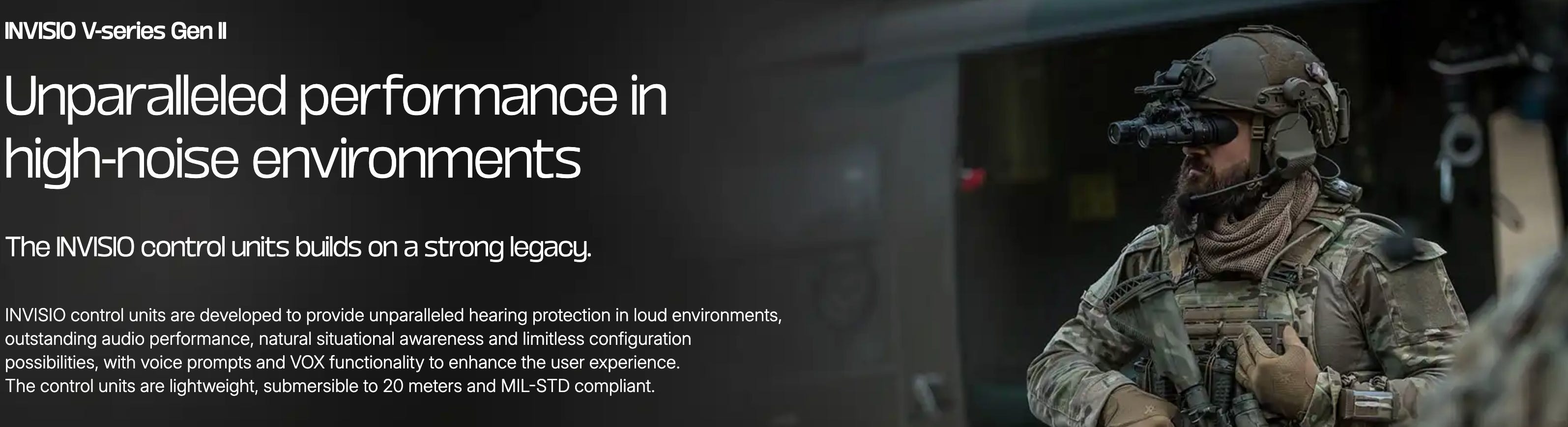
Earlier in their history, Invisio was most known for providing the best tactical headset. However, over the years, and especially following the Racal Acoustic acquisition in 2021, Invisio became more a complete communication provider for military settings. There’s also ample opportunity for Invisio to expand beyond military operations
However, the stock have fallen 35% over the last year, also due to a shrinking order book. Importantly, defence orders are lumpy in nature, and the CEO said this in Q2:
Our assessment is that no orders were lost, only delayed — and we expect to recover this business gradually during the second half of the year
You can see our KPI and forward return potential for Invisio below. With an EV / NOPAT going from 200 (!) → 30x, the stock may finally reach closer to Intrinsic Value. Invisio is a company that always have had a lot of investor expectation, with good reason like you can see from the revenue figures and impressive ROIIC below.
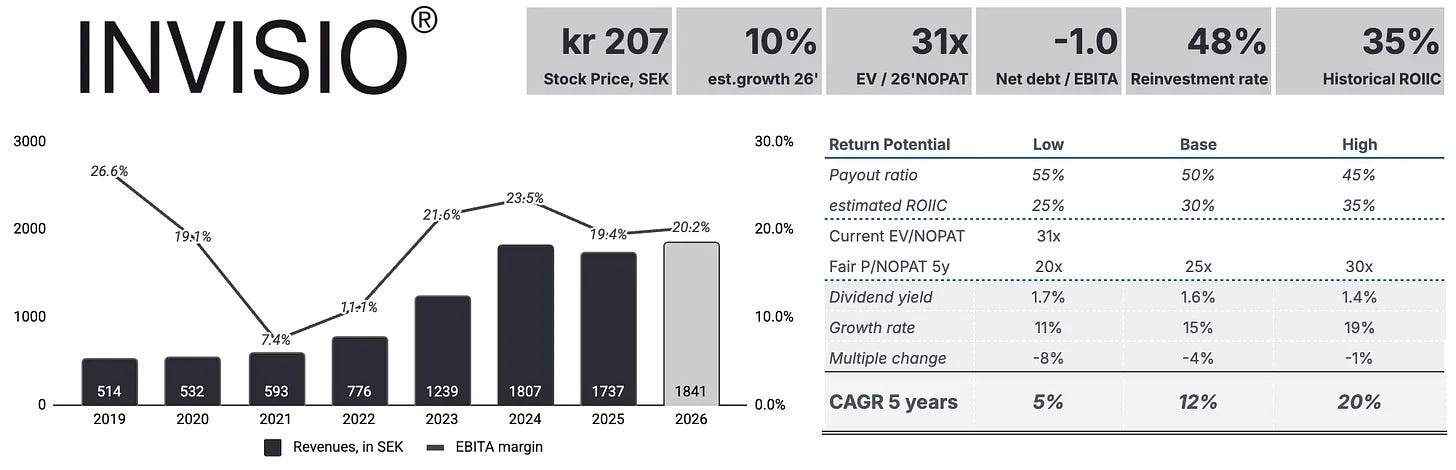
And positively, we’ve seen 5 different insiders purchase shares on the open market since May. Further, CEO Lars Hansen has 12x higher stock ownership than his fixed salary, or 6x vs total compensation in 2025. His variable compensation is determined from 60% order book and 40% operating margin. Invisio’s CFO also has a meaningful stake (47 million SEK) in shares, likely a multiple of 6-8x his salary. Importantly, Invisio also has an anchor shareholder in William Demant Invest, which is a long-term owner.
We think Invisio management is incentivized to optimize this company for the long-term, and with a track-record like theirs, we’re happy to see them have ambitious goals of roughly 20% profit growth annually. However, orders will be lumpy, like we’re seeing now. That’s typically when such a quality stock becomes cheaper.
Firefly
Firefly develop fire prevention and explosion protection systems for industrial processes, a mission-critical piece of insurance. This goes for wood, paper and food processing, recycling, biomass plants, tunnels or even in energy plants.
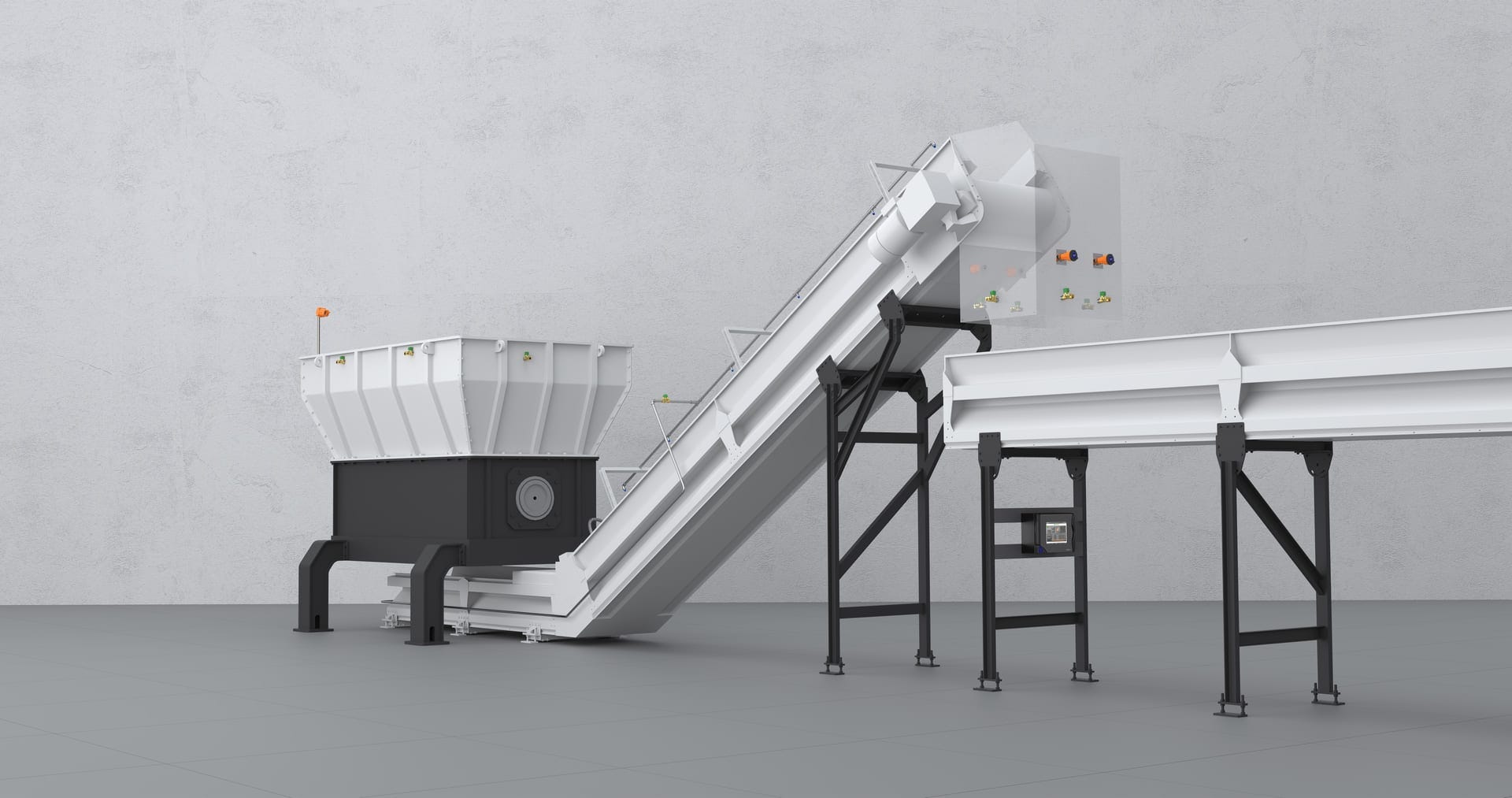
Their equipment is a critical part of manufacturing lines, and can be custom designed. Firefly have built up niche expertise and a portfolio of patents since 1969. Sales are either directly or through distributors in more than 70 countries. But it’s just in the last 5 years, Firefly started establishing subsidiaries outside the Swedish borders, in Poland and Italy. They also have a long-track record of innovations, recently with an automated water cannon. Their equipment is also combined with their own software, making the competetive advantage within their niche harder to replicate, and unfeasible for customers to do themselves..
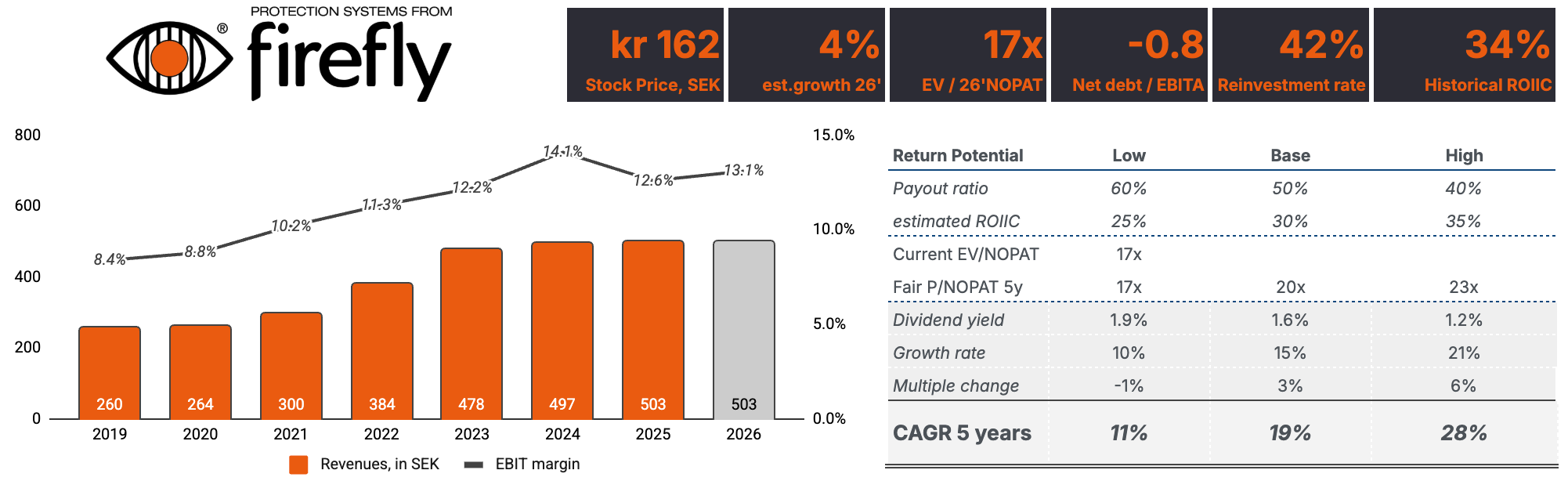
The company is small, just $102 million in size, but has attractive unit economics. Since 2019, ROIIC have been 34% and with a reinvestment rate of 42%, profit growth has been exceptional at 17% annually. Last year, investors even received a 6% dividend boosted by a special-dividend, enabled by their significant net cash balance.
Lifco
An investor favourite, with good reason, is serial acquirer Lifco. With strong returns on incremental capital of 16%, combined with high reinvestment rates of 87% for the last 7 years, Lifco have been one of the more stable compounders out there.
And, with today’s acquisition of ErgoPack in France and last quarters acquisition of Glass Umbrella in the UK, it’s clear that Lifco is no longer just a Swedish Industrial acquirer. Just 9% of Lifco’s sales are currently in Sweden.
Another thing we particularly appreciate with Lifco is their focus on organic EBITA growth, not just organic sales growth. Where exiting less profitable business over time hurts organic sales growth, organic EBITA is less impacted. And with Lifco’s focus on profitable growth, they’ve been able to become a higher quality company over time. Note that most industrial acquirer struggle to reach 10% EBITA margins. Lifco’s 22% EBITA margin speaks volumes about business quality and cost discipline.
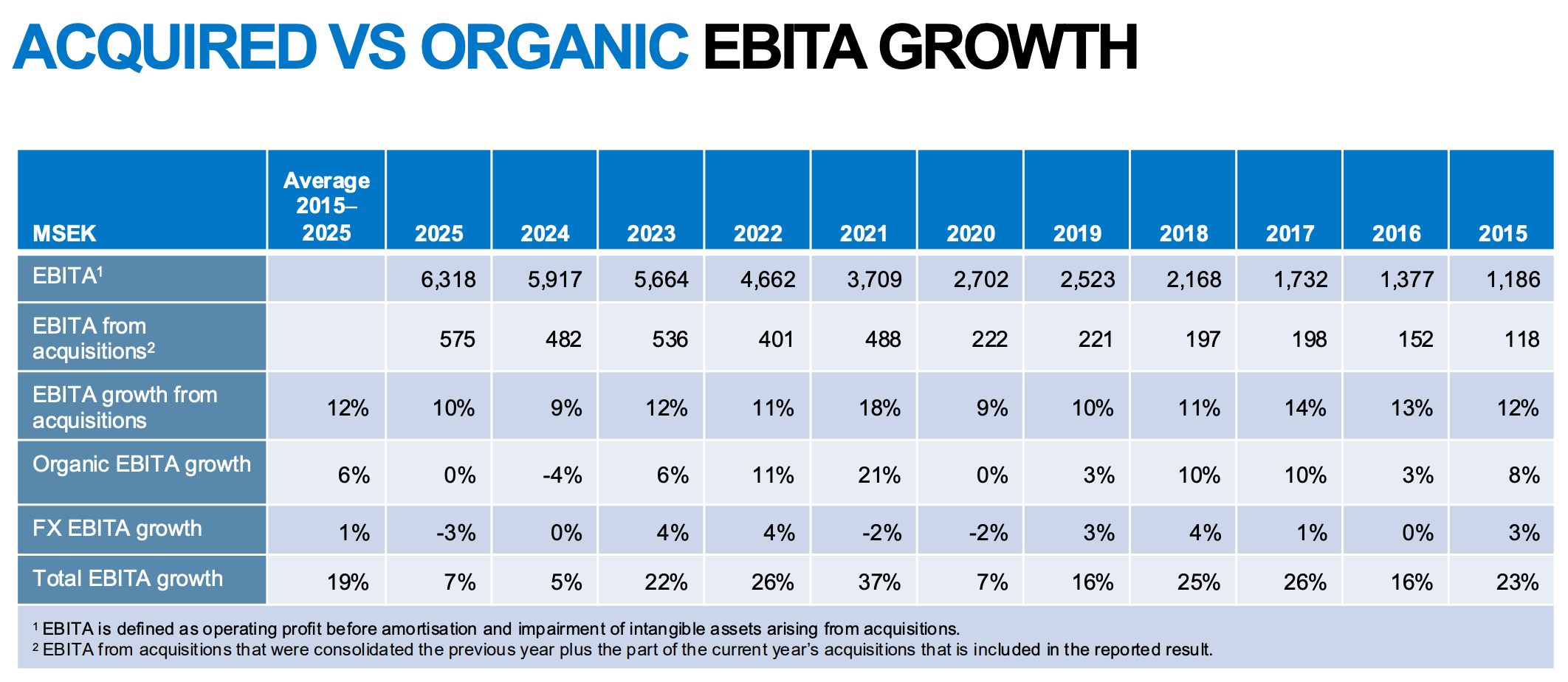
When it comes to our expected future returns for Lifco, we have them at today’s price of 324 SEK around 12% annual return for the next 5 years. That factors in some multiple contraction from today’s ~28x. But, a problem with valuing Lifco is just how durable their strategy have been so far. Looking at Lifco’s track-record, the assumption that Lifco would move towards average in year 5 or 10, would have consistently underestimated the strength of their capital allocation model.
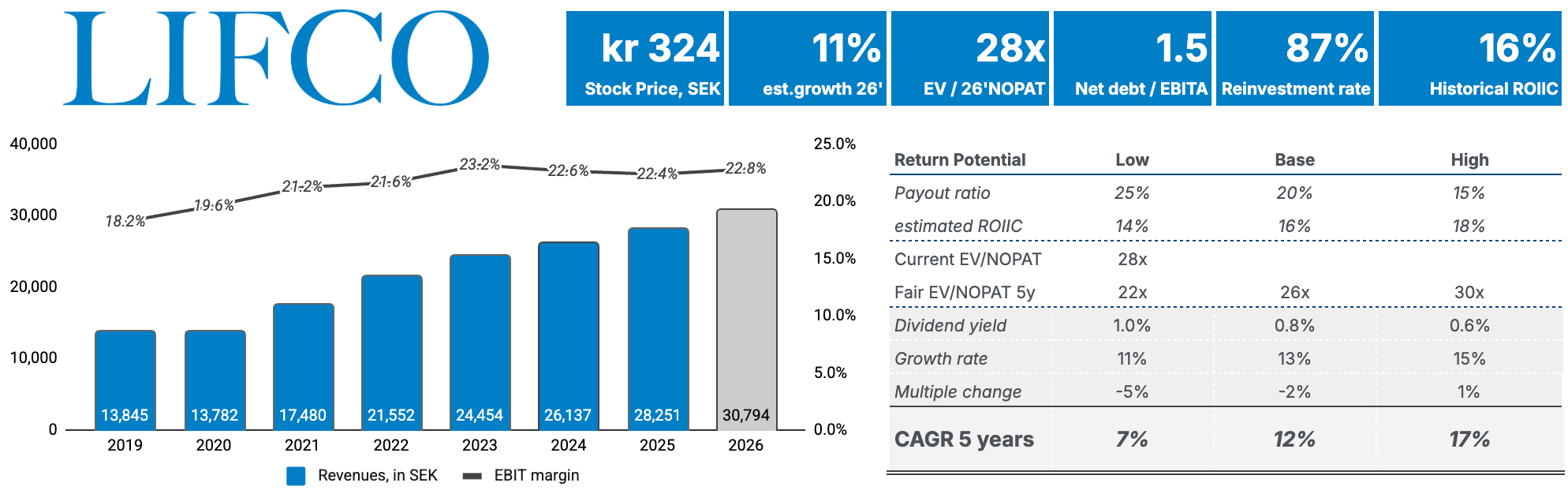
Given wthis, we would accept a slightly lower expected return in our model for a company of Lifco’s caliber, versus Invisio or Firefly for instance. This due to the smaller likelihood for disruption and higher confidence around their growth runway. At today’s price of 324 SEK, Lifco does not look like a bargain, but it’s definitely more attractively priced than it’s been in a long time.
Time to wrap this up. For those interested in the numbers, we’ll leave the full screen below, with all the data. For those interested in the 2 prior years' versions, you can find the link through those below.
All the best,
Ole
And if you’re interested in reading about Norbit and Medistim, the two companies in our portfolio today, we’ll share writeups where we discuss those in closer detail.


Detailed 2026 List
Note that a company like Harvia scored poorly this year, and excellent last year. That’s simply due to the comparison point 5 years ago hits a cyclical peak today, and the opposite last year. Cycles is one of the things we should be mindful of when using such data to generalize quite complex underlying businesses.
There’s often much more than what meets the eye at first glance…