

This month, we’ll try a different format for this letter, going through what we’ve found of signal in a very noisy world. Thus, it felt timely that the first point had to cover new relevant information we’ve learned this month. Following that is our Portfolio Update.
Disclaimer: This newsletter is provided for informational and educational purposes only. The views expressed are my own and do not constitute financial advice or recommendations to buy or sell any securities. The author may own shares in the equities discussed.
New information this month
Investor AB
A) Accountability and focus beats cost synergies
Investor intend to split up their largest private holding Mölnlycke (7% of NAV) into two separate companies. When an analysts asks whether this won’t increase costs, the answer from CEO Christian Cederholm was very insightful.
Seperation typically means that you will have to duplicate certain costs and functions and whatnot. Again, that is fairly easy to capture ahead of it.
The value and the potential is harder to quantify. But over and over again, we have seen how greater accountability and focus drives value.
On your second question (separation to show value), the motivation for seperating is not to sell one or both of the companies, nor is it it to enhance valuation by way of applying a different peer set.
This follows a familiar pattern for Investor shareholders (eg. Atlas Copco + Epiroc and ABB + Accelleron). But where most seperations are made to reveal hidden value or sell non-core assets, this is not the function here. Instead, its a result of decades of success resulting in a company to large. The advantages of increased scale and diversification weighs down on accountability and focus. And importantly for this case, it’s a very long-term move, in contrast to revealing hidden value.
The market appears to have rewarded Investor for consistently optimizing their portfolio for the long term: it is one of the few European holding companies that does not trade at a discount to net asset value (NAV).
Something we still believe is underappreciated is Investor’s hit-rate. Whether its a result of already owning high-quality companies or from them helping optimizing the long-term strategy through board seats we’re not sure of. But what they’re doing is certainly working. Investors’ success in the last decade has been driven by a broad outperformance from all parts of their portfolio. And the few losers, have grown to insignificant stakes (Electrolux and Husqvarna).
B) Organic growth picking up
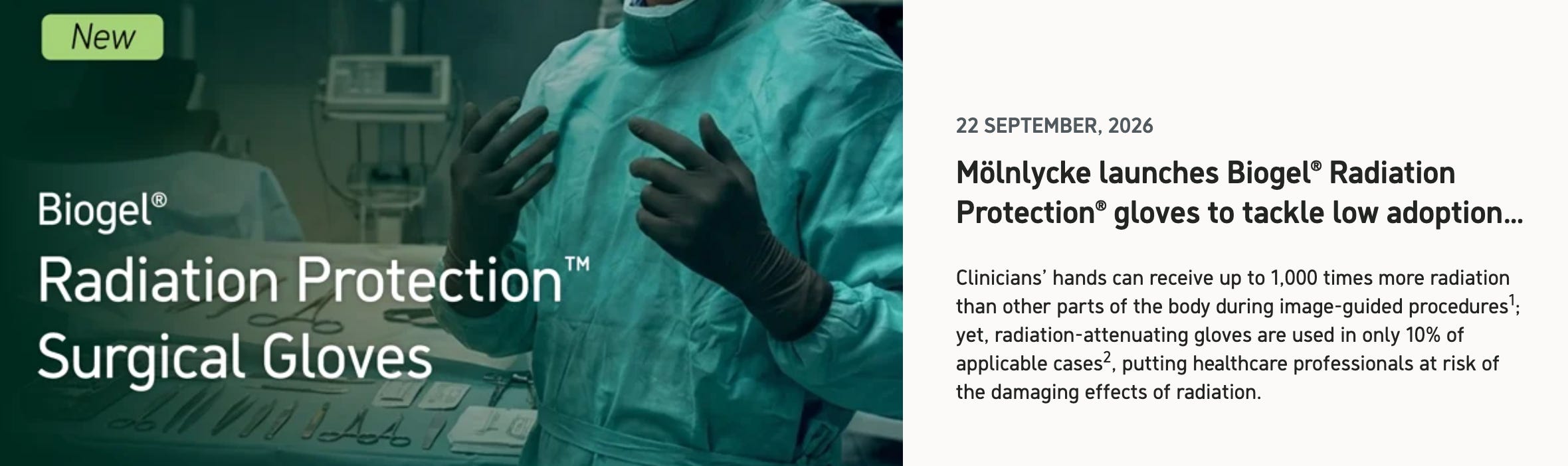
A positive note in the Q3 2026 report was organic growth within Patricia Industries. Currency-neutral organic growth of 7% is nothing short of spectacular for a portfolio with not much exposure to AI or defence. Patricia Industries healthcare-focused portfolio have strong competetive positions within several niches. One example of organic initiatives last quarter, was Mölnlycke launching raditation-protected gloves.
Investor A shares trade at 409 SEK, and is priced around fair value in our opinion. We hold our stake for now, which is at 8%, including our stake in EQT.
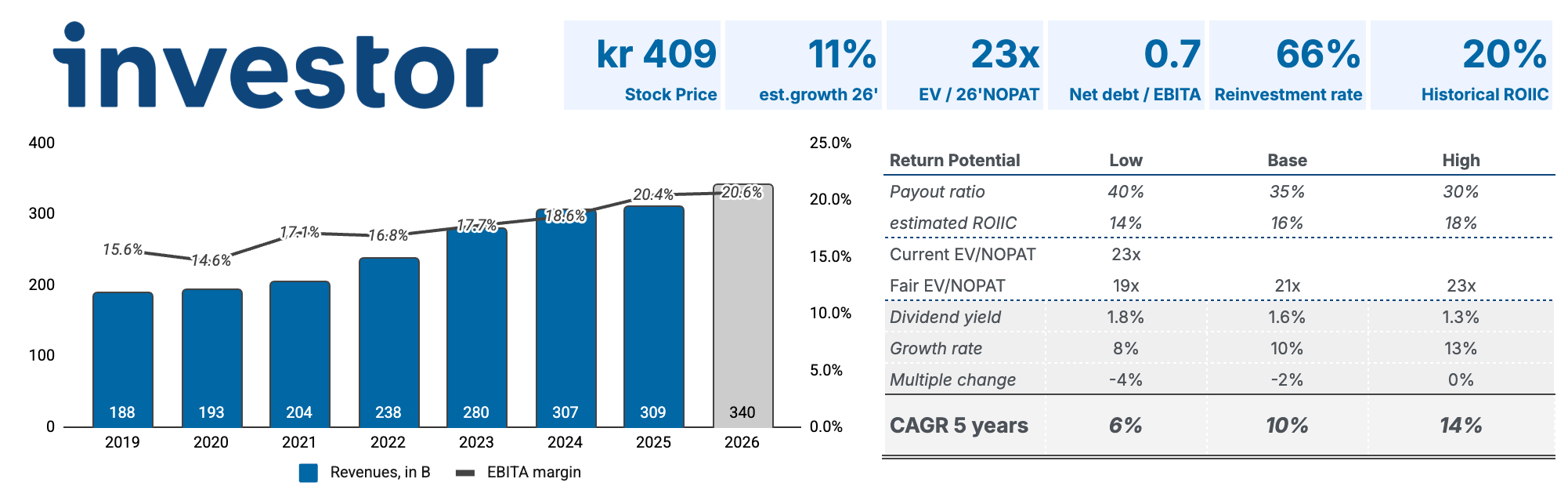
You can find our last writeup of Investor below, going over the Net Assets.

EQT AB
A) Investor’s most attractively priced asset
Investor rarely makes investments into their listed portfolio, despite it compromising more than 70% of NAV. But following their Q3 report, however, they added 3,5 billion SEK to their EQT position, increasing their stake from 14 → 15%.
We covered our investment thesis behind EQT back in July this year.
